Hi, this is Datumdraft.
If you follow the autonomous vehicle industry, you have probably seen a headline that says Waymo is coming to Japan with a Toyota. The next sentence usually blurs two different plans into one. This post separates them, then looks at the part that actually changes how robotaxis get built.
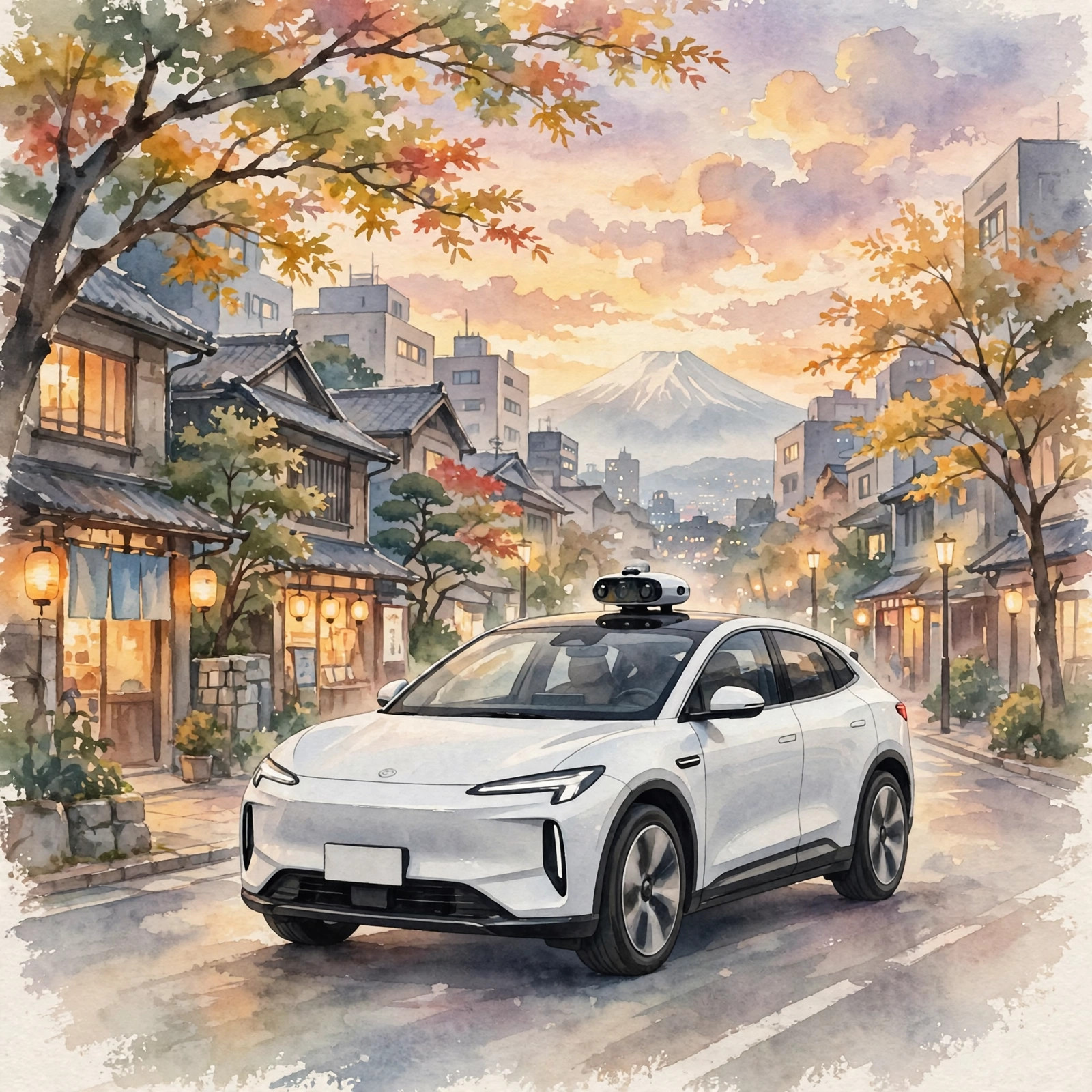
Waymo and Toyota announced on October 30, 2026 that Toyota will build a custom robotaxi version of the 2027 bZ4X at its Takaoka plant in Aichi Prefecture. The Waymo Driver hardware goes in at the same plant. The car leaves the factory as a robotaxi. It does not leave as a finished car and come back for a second round of work somewhere else.
That sounds like a small production detail. It is the point of the deal. A robotaxi built this way avoids the strip-and-rebuild step that slowed earlier fleets. The 2027 Japan operation is a small test and validation fleet, not a commercial service. Japan comes first for right-hand-drive testing, and the United Kingdom follows.
The short version
Toyota builds a custom 2027 bZ4X robotaxi at Takaoka. Waymo Driver hardware is integrated at the same plant, under one roof. Operations in Japan start in 2027 as a small test and validation fleet. This is separate from the September 2026 Tokyo commercial plan, which uses about 100 Jaguar I-Pace vehicles with Nihon Kotsu and the GO app and is still awaiting approval. The bZ4X is Waymo’s fourth vehicle platform, after the Jaguar I-Pace, Zeekr, and Hyundai Ioniq 5. As of October 30, 2026, Waymo was doing more than 500,000 paid rides per week across 15 U.S. metro areas.
| Item | Waymo-Toyota bZ4X plan | Tokyo commercial plan |
|---|---|---|
| Vehicle | Custom 2027 Toyota bZ4X | Jaguar I-Pace |
| Announced | October 30, 2026 | September 2026 |
| 2027 Japan operation | Test and validation, small fleet | Commercial service plan, approval pending |
| Partner | Toyota, Takaoka plant | Nihon Kotsu and GO |
| Scale | Small fleet, count undisclosed | About 100 vehicles planned |
The end of the retrofit era
Early robotaxi fleets started with a finished car. Engineers then removed trim, ran new wiring, mounted sensors, and checked that everything still worked. The car had already passed quality control once. The retrofit shop ran a second, separate quality process.
That worked when fleets were small. It did not scale well. Each car took extra time, extra labor, and extra handling. A missed connection or a loose mount could show up only after the car was back on the road.
The Toyota deal removes that second pass. The bZ4X body and the Waymo Driver hardware meet on the same production line at Takaoka. Wiring, mounting points, and cooling are part of the build, not additions after the fact. The car is tested once, as a complete robotaxi.
Think of a new apartment. The old method was to finish the apartment, hand over the keys, then tear out the finished walls to run new wiring for a home system. The new method runs that wiring while the walls are still open. The result looks the same from the outside. The build is cleaner, faster to repeat, and easier to inspect.
Toyota and Waymo agreed to work together in a preliminary agreement in April 2025. The October 30, 2026 announcement moves that agreement into production. Toyota builds the vehicle. Waymo supplies the driver system. Woven by Toyota, Toyota’s software and mobility subsidiary, is part of the collaboration.
Why one roof changes the math
Quality is the first gain. A mounting point designed into the body holds a sensor in the same place on every car. A bracket added later depends on the shop doing the same job the same way, car after car.
Speed is the second gain. A car that leaves the line ready for service does not wait for a retrofit slot. That matters when a fleet grows from tens of cars to hundreds.
Cost is the third gain. Toyota already runs the plant, the supply chain, and the workforce. Waymo does not need to build a parallel retrofit operation to keep up.
2027 Japan operations are test and validation only. They are not a commercial service.
Two Japan plans, not one
Search results mix the two Japan plans because both involve Waymo, both involve Japan, and both were announced in the fall of 2026. The vehicles, partners, and goals are different.
The bZ4X plan is a manufacturing and testing program. Toyota builds the car at Takaoka. Waymo runs a small fleet in Japan in 2027 to test and validate the system on Japanese roads.
The Tokyo plan is a commercial ride-hailing plan. It uses Jaguar I-Pace vehicles, not the bZ4X. Nihon Kotsu, a Tokyo taxi operator, and GO, a mobility platform, are the local partners. About 100 vehicles are planned. The service is still awaiting regulatory approval.
That distinction answers the most common question readers ask: can I ride a Waymo bZ4X in Tokyo soon? No. The bZ4X fleet in 2027 is for testing. The Tokyo commercial plan, if approved, will use I-Pace vehicles.
Three checks before you trust a headline
First, check the date. Reports that cite November 3 as the announcement date are wrong. The announcement was October 30, 2026. That date often comes from delayed syndication, when a story is republished days later with a new timestamp.
Second, check the vehicle. A story about bZ4X commercial service in Tokyo has mixed the two plans. The bZ4X is the test fleet. The I-Pace is the commercial fleet.
Third, check the numbers. Fleet size, operating cities, sensor details, and cost for the bZ4X program are undisclosed. Any article that states them as fact is guessing. The Tokyo plan is the only one with a stated scale, about 100 vehicles.
Why Japan, and why right-hand drive
Waymo’s U.S. system was built for right-hand traffic. Japan drives on the left side of the road, with the driver on the right. That flips the view at intersections, the side where pedestrians step off the curb, and the way signs and road markings line up in the sensor’s view.
A system that works in Phoenix does not automatically work in Tokyo. It needs to learn the new geometry, then prove it can handle it safely. That is what the 2027 test fleet is for.
Japan is the first right-hand-drive market in the sequence. The United Kingdom follows. Both countries drive on the left. A system validated in Japan gives Waymo a tested right-hand-drive base to carry into the UK.
Scale is what makes this test worth watching. As of October 30, 2026, Waymo was running more than 500,000 paid rides per week across 15 U.S. metro areas. That volume gives the company a large set of real driving cases to compare against the new right-hand-drive data.
What changes on the other side of the road
At a junction, a left-hand-drive car turns across oncoming traffic in one direction. A right-hand-drive car does it in the other. The sensor’s view of a turning vehicle, a cyclist, and a pedestrian changes with it.
Pedestrians also approach from the other side. In the U.S., a pedestrian often steps off the curb on the driver’s left. In Japan, the pattern reverses. The system needs to expect that, not just react to it.
Road signs and lane markings sit in different places relative to the driver. None of this is new physics. It is a large set of small differences, and each one needs validation before passengers ride.
Waymo’s fourth platform
The bZ4X is not Waymo’s first partner car. It is the fourth platform in a portfolio built to avoid depending on one supplier.
The Jaguar I-Pace was the first. Zeekr followed with a vehicle designed for autonomous service. Hyundai’s Ioniq 5 came next. The Toyota bZ4X now joins them.
Each platform adds a different strength. Jaguar brought an early production vehicle. Zeekr brought a purpose-built design. Hyundai brought a second large automaker. Toyota brings the largest automaker by volume and a plant that can build the car and integrate the driver system in one place.
A portfolio also spreads risk. If one supplier faces a production delay, the others keep the fleet growing. If one region needs a different vehicle size or a local plant, Waymo has a partner there.
What Toyota gets from the deal
Toyota gets a working autonomous system without building one from scratch. Waymo has already run more than half a million paid rides a week in the U.S. That is real operating data, not a demo.
Toyota also gets a test of its own production model. If the Takaoka line can build a robotaxi as a standard product, the same approach can apply to other vehicles and other plants.
For Waymo, Toyota brings volume. A robotaxi business that depends on a small supplier cannot grow fast. A business that can order from the world’s largest automaker can.
What to watch next
The first thing to watch is the 2027 test fleet itself. How many cars run, where they run, and how the test expands will say more than any announcement.
The second is the UK step. Japan is the test ground for right-hand drive. The UK is the first place where that test has to turn into a service plan.
The third is production. If Takaoka builds the bZ4X robotaxi cleanly, other automakers will face a direct question: can they offer the same one-roof build, or will they keep shipping finished cars to a retrofit shop?
Takeaways
- Toyota builds a custom 2027 bZ4X robotaxi at Takaoka, with Waymo Driver hardware integrated at the same plant.
- Japan operations in 2027 are a small test and validation fleet, not a commercial service.
- The Tokyo commercial plan uses Jaguar I-Pace vehicles with Nihon Kotsu and GO, about 100 vehicles, approval pending. It is a separate plan.
- Right-hand-drive expansion starts in Japan, then moves to the United Kingdom.
- The bZ4X is Waymo’s fourth vehicle platform, after the Jaguar I-Pace, Zeekr, and Hyundai Ioniq 5.
- As of October 30, 2026, Waymo was doing more than 500,000 paid rides per week across 15 U.S. metro areas.
Save this page and check it against the next Waymo Japan headline. If the story says bZ4X, look for the word test. If it says I-Pace, look for the word commercial. That one check will keep most of the confusion out.
Sources
- Toyota and Waymo Advance Autonomous Driving Collaboration for Safer Streets and Freedom of Movement for All — Toyota Motor Corporation, October 30, 2026
- Waymo picks Toyota bZ4X as its next robotaxi, starting in Japan in 2027 — Electrek, October 30, 2026
- Waymo And Toyota Will Soon Start Testing Their Robotaxis In Japan — Engadget, October 30, 2026
- Toyota Will Build bZ4X Robotaxis for Waymo, Starting in Japan in 2027 — Teslant, October 30, 2026