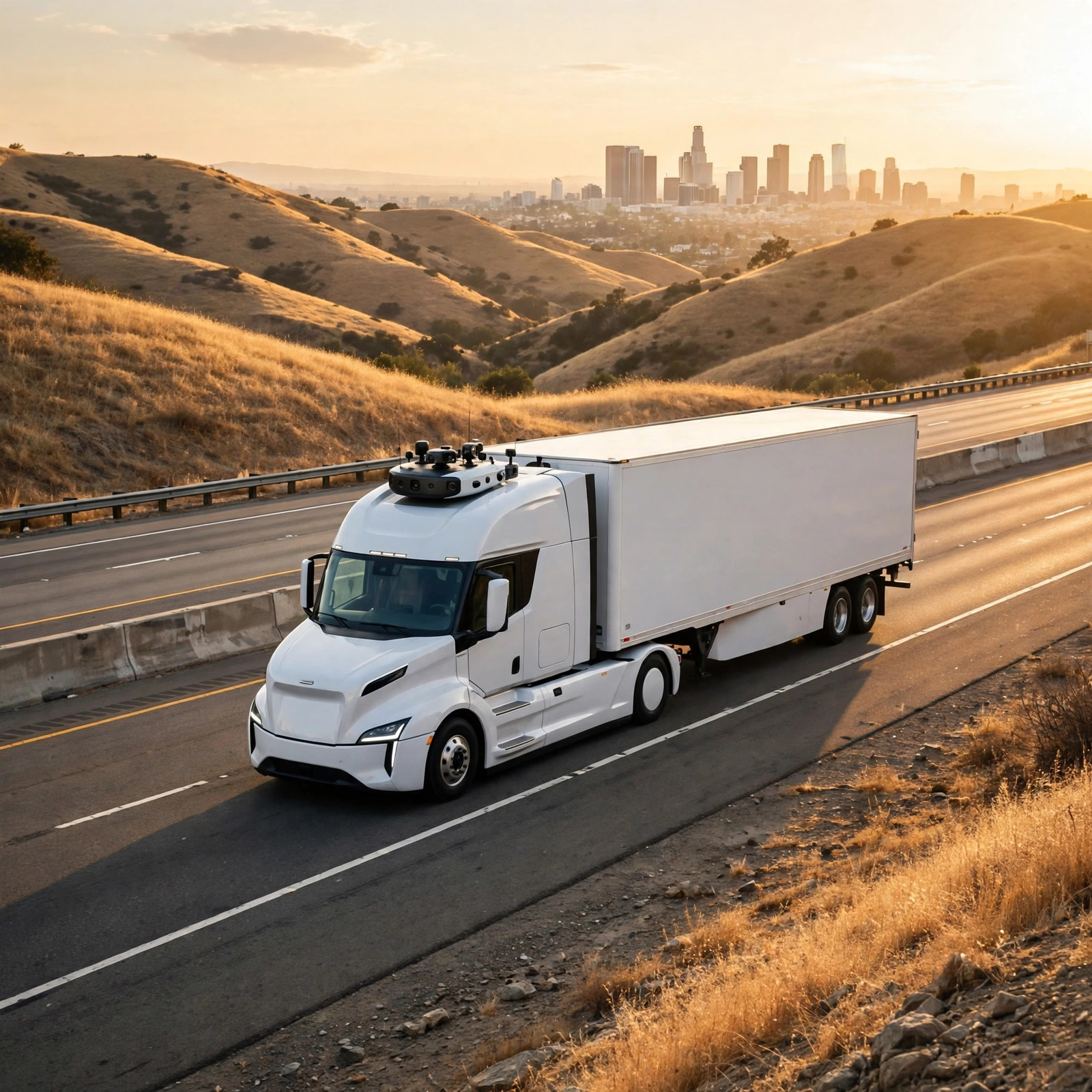
Hi, this is DatumDraft. If you saw the news on November 14, 2026, you probably read that California police can finally write traffic tickets to empty robotaxis under the new California DMV autonomous rules. That headline makes for great television, except for one detail: California actually unlocked police noncompliance notices back on July 1, 2026, while the November 14 overhaul quietly handed regulators the power to shrink robotaxi fleets and opened public highways to heavy-duty autonomous semi-trucks.
Why did almost every local broadcast mix up those two dates, and what does the new rulebook actually mean if you share the road with driverless cars or invest in autonomous freight? When we separate the July statutory launch from the November administrative rules, a much sharper picture of California’s regulatory pipeline comes into focus.
At a Glance
- July vs. November: Police noncompliance notices started on July 1, 2026, while November’s final rules give the DMV stepwise fleet suspension powers.
- Heavy-Duty Greenlight: Autonomous semi-trucks weighing over 10,001 pounds can now apply for California public highway testing permits.
- Emergency Response: Operators must staff a dedicated two-way line answering police and firefighters within 30 seconds during active road incidents.
- Next Regulatory Gate: The California Public Utilities Commission votes on November 19, 2026, to tighten commercial robotaxi passenger reporting rules.
Why did everyone think robotaxi tickets started on November 14 — and what did the California DMV autonomous rules actually change?
Think of a high school where hallway monitors can write down the names of students running in the corridors, yet the principal only has two punishments in the handbook: a polite warning or total expulsion. On July 1, 2026, California gave police officers the notepad to write up misbehaving robotaxis, and on November 14, 2026, the Department of Motor Vehicles (DMV) finally gave the principal a full detention and suspension menu.
The push for this system began in the early hours of September 27, 2025, in San Bruno, California. During a sobriety checkpoint, San Bruno police officers watched an empty autonomous Jaguar make an illegal U-turn right in front of their patrol cars. When officers pulled the vehicle over, they realized the California Vehicle Code (CVC, the state’s official traffic rulebook) only allowed citations to be issued to a human person sitting in the driver’s seat. The robotaxi drove away without a ticket.
To close that loophole, California lawmakers leaned on Assembly Bill 1777 (AB 1777, a state law signed by Governor Gavin Newsom in September 2024 to regulate driverless vehicles). On April 28, 2026, California’s Office of Administrative Law (OAL, the agency that reviews state agency rules) approved DMV Form OL 325, officially titled the Notice of Autonomous Vehicle Noncompliance. Starting July 1, 2026, police officers gained the legal tool to document moving violations committed by empty vehicles and send those notices straight to the DMV and the manufacturer.
So what actually changed on November 14, 2026? Before the November update to Title 13 of the California Code of Regulations (Title 13 CCR, the administrative code governing motor vehicles), receiving an OL 325 notice left the DMV with an all-or-nothing dilemma. Regulators could either wag a finger at the company or revoke its entire statewide permit. The November 14 final regulations establish incremental enforcement authority, allowing the DMV to match the penalty to the pattern of violations.
- Fleet size caps: The DMV can reduce the maximum number of driverless vehicles an operator is allowed to run on public streets.
- Geofence and hour restrictions: Regulators can ban an operator from specific neighborhoods, downtown cores, or late-night hours where violations cluster.
- Temporary permit suspensions: The agency can pause a company’s testing or deployment permit until engineers prove the software bug behind a violation is fixed.
- Mandatory 72-hour data handovers: Following severe safety incidents or compliance inquiries, manufacturers must turn over telemetry and video logs within 72 hours.
Immediately following the November 14 announcement, Waymo told reporters that its legal and safety teams were reviewing the final regulations. For operators running hundreds of commercial trips per hour, an accumulation of routine traffic notices can now directly shrink their operating map.
Don’t Confuse a Traffic Citation with a Notice of Noncompliance (Form OL 325)
When a human driver runs a red light, the officer issues a citation that puts negligence points on a personal driver’s license. Because a software stack does not hold a personal license, Form OL 325 is an administrative noncompliance record filed against the corporate manufacturer. Instead of adding points to a license, repeated OL 325 filings erode the company’s DMV deployment permit standing and trigger fleet restrictions.
| Effective / Action Date | Legal Authority & Agency | Core Regulatory Change | Real-World Impact on AV Operators |
|---|---|---|---|
| April 28, 2026 (Approved) July 1, 2026 (Effective) |
California Legislature (AB 1777) & CA DMV Form OL 325 (OAL Approved) | Created the Notice of Autonomous Vehicle Noncompliance; mandated two-way emergency lines and 2-minute emergency geofence exits. | Police began logging traffic violations committed by empty cars and routing records to the DMV. |
| November 14, 2026 (Announced) | California DMV Final AV Regulations (Title 13 CCR Amendments) | Approved testing permits for 10,001+ lb semi-trucks; established stepwise DMV permit restrictions; integrated 30-second responder protocols. | DMV can shrink fleet sizes or restrict operating zones without revoking a company’s entire statewide permit. |
| November 19, 2026 (Scheduled Vote) | California Public Utilities Commission (CPUC Passenger Program) | Voting meeting to align commercial robotaxi fare-service reporting, stop-event disclosures, and city data sharing with DMV rules. | Robotaxi operators must meet tighter municipal reporting rules to keep charging passenger fares. |
What do the 30-second phone rule and the 2-minute geofence rule actually require during an emergency?
When a four-alarm fire breaks out on a city block, firefighters do not have time to navigate an automated customer service phone menu just to tell an empty SUV to get off their water hose. Pressing the emergency call button on a stalled robotaxi works like buzzing the intercom at an apartment parking gate: someone in the control room has to pick up within 30 seconds, while a police perimeter alert works like a building fire alarm that gives the company 2 minutes to clear every vehicle out of the block.
Over the past two years, fire departments in San Francisco and Los Angeles documented dozens of incidents where driverless cars froze behind ladder trucks or crept through yellow police tape. Media coverage of the November 14 announcement frequently blended two different numbers—30 seconds and 2 minutes—into a single soundbite. In reality, those two timers govern two distinct stages of an emergency response.
First is the 30-second voice response benchmark. Under the DMV’s updated Law Enforcement Interaction Plan (LEIP, the mandatory playbook every autonomous vehicle company must file showing how first responders can control their vehicles) and CPUC safety guidelines, operators must provide a dedicated, two-way communication line accessible directly from the vehicle and through dispatch. When a police officer or firefighter triggers that line at an active scene, a live remote specialist is expected to answer within 30 seconds to disable autonomous drive, unlock doors, or coordinate a manual tow.
Second is the 2-minute emergency geofence mandate codified under AB 1777 (specifically California Vehicle Code Section 22658.3). A geofence is a virtual boundary drawn on a digital map that tells software where a vehicle can and cannot drive. When police or fire commanders transmit an official emergency geofence alert for a wildfire, active shooter scene, or major crash, the autonomous vehicle manufacturer has exactly 2 minutes to block new vehicles from entering that zone and command any vehicles already inside to exit safely.
As companies scale up round-the-clock operations—a challenge we examined in our breakdown of Tesla Robotaxi 24/7 fleet deployments—remote staffing ratios become a regulatory survival issue. If a night-shift remote operations center gets overwhelmed during a citywide storm and misses its 30-second answer target or 2-minute reroute window, the DMV now holds the incremental enforcement tools to suspend night operations the very next week.
| Time Window | Operational Scenario | Legal / Regulatory Source | Consequence of Failure |
|---|---|---|---|
| Within 30 Seconds | First responder calls dedicated two-way line on scene to move or disable an autonomous vehicle. | CA DMV Emergency Response Protocol (Law Enforcement Interaction Plan) & CPUC Guidelines | Triggers noncompliance record and potential operational hour or zone restrictions under Title 13 CCR. |
| Within 2 Minutes | Fire or police command issues an emergency geofence perimeter around an active incident scene. | Assembly Bill 1777 (California Vehicle Code §22658.3) | Statutory noncompliance violation; DMV can suspend deployment permits in affected jurisdictions. |
| Within 72 Hours | DMV requests telemetry, video, or remote operator logs following a critical incident or OL 325 notice. | CA DMV Final Autonomous Vehicle Regulations (Title 13 CCR, Nov 14, 2026) | Immediate administrative permit suspension for failure to cooperate with safety oversight. |
Why did California finally lift its ban on 10,001-pound autonomous semi-trucks—and why are the Teamsters furious?
For over a decade, California ran its public roads like a community swimming pool that let autonomous software splash around in the shallow kids’ section while keeping a padlock on the deep diving pool. On November 14, 2026, the DMV unlocked the deep end for heavy-duty trucks weighing over 10,001 pounds—about the weight of two full-size family pickups combined—provided companies swim laps with a human lifeguard in the cab before ever testing without a driver.
Until this rule change, the California DMV barred autonomous testing for any commercial vehicle with a Gross Vehicle Weight Rating (GVWR, the maximum safe weight of a vehicle plus its cargo) of 10,001 pounds or more. While robotaxis roamed San Francisco, autonomous freight developers like Aurora, Kodiak Robotics, and Plus were locked out of California’s Interstate 5 corridor and forced to run their Class 8 semi-trucks (18-wheelers that can weigh up to 80,000 pounds fully loaded, or roughly 16 family SUVs) in Texas and Arizona instead.
The November 14 final rules lift that blanket prohibition and create a structured permit pathway for medium- and heavy-duty autonomous commercial vehicles (Classes 3 through 8). However, the DMV kept strict guardrails on what kinds of heavy vehicles qualify and how they must be tested.
- Three-stage permit ladder: Trucking developers cannot launch empty 18-wheelers on day one. They must first log supervised testing miles under a Manufacturer’s Testing Permit with a trained human safety driver behind the wheel, graduate to a Driverless Testing Permit after proving safety readiness, and finally apply for a Deployment Permit for commercial freight operations.
- Mandatory CHP commercial inspections: Heavy-duty autonomous trucks must comply with California Highway Patrol (CHP) commercial motor vehicle inspection protocols and terminal safety checks.
- High-risk cargo exclusions: The DMV still bans autonomous operation for passenger buses, school buses, vehicles hauling hazardous materials (HazMat), bulk liquid tank trucks, and household goods carriers.
The political battle behind this decision has been fierce. In 2023 and again in 2024, the International Brotherhood of Teamsters pushed bills (AB 316 and AB 2286) through the California Legislature that would have mandated a human safety operator inside every autonomous truck over 10,000 pounds. Governor Gavin Newsom vetoed both bills, arguing that the DMV should regulate heavy trucks through flexible administrative rules rather than a permanent legislative ban.
When the DMV finalized those administrative rules on November 14, the Teamsters immediately condemned the decision, warning that allowing 80,000-pound driverless rigs onto California freeways threatens union trucking jobs and public highway safety. Autonomous freight companies counter that California’s ports in Los Angeles and Long Beach cannot stay competitive if automated freight corridors stop at the Arizona state line.
What happens at the November 19 CPUC vote, and how does California compare to Japan and Europe?
Winning a permit from the California DMV without clearing the California Public Utilities Commission (CPUC) is like getting a restaurant health inspection certificate without being allowed to charge customers for the food. You can legally run your kitchen and cook meals, yet you cannot collect a single dollar until the second agency stamps your commercial service rules.
California splits autonomous vehicle oversight between two state bodies. The DMV regulates the vehicle hardware, software safety, and road behavior for both passenger cars and freight trucks under the Vehicle Code. The CPUC regulates commercial passenger transportation—meaning any robotaxi service that picks up members of the public and charges a fare—under the Public Utilities Code.
Just five days after the DMV’s November 14 overhaul, the CPUC is scheduled to hold a key voting meeting on November 19, 2026, to update its Autonomous Vehicle Passenger Service Program rules. While the DMV focused on police noncompliance notices and semi-trucks, the November 19 CPUC vote targets how commercial robotaxi fleets report day-to-day street friction to local cities.
- Faster reporting on roadway stops: Operators face tighter rules for documenting every time a driverless passenger car stalls in a travel lane or blocks municipal transit buses.
- Expanded city data access: Transportation departments in cities like San Francisco and Los Angeles gain clearer visibility into anonymized trip volumes, pick-up/drop-off congestion, and first-responder interactions.
- Aligned permit enforcement: If the DMV restricts an operator’s geographic zone under its November 14 rules, the CPUC’s passenger service authorization adjusts in lockstep so a company cannot collect fares in a restricted area.
How California’s post-deployment policing differs from Japan and Europe
Stepping back, California’s regulatory model looks very different from how Asian and European governments police self-driving cars. In the United States, federal regulators allow manufacturers to self-certify vehicle safety standards, leaving states like California to manage public road permits and punish bad behavior after vehicles hit the street via tools like Form OL 325.
Japan takes the opposite approach by locking the gate before the car ever enters traffic. As we detailed in our analysis of Japan’s type approval standards for steering-wheel-free autonomous vehicles, Japan’s Ministry of Land, Infrastructure, Transport and Tourism (MLIT) requires upfront hardware and software design certification before a vehicle model can be mass-produced or deployed.
Europe relies on a multi-country committee bottleneck. Even when an automaker begins testing in individual European countries, full commercial rollout requires clearing United Nations Economic Commission for Europe (UNECE) working groups and a formal European Commission committee vote—a structural hurdle we covered in our report on Tesla FSD Europe approval timelines. Compared to Tokyo’s pre-market engineering audits and Brussels’ multi-state votes, California lets autonomous fleets onto public streets faster, then uses continuous police noncompliance filings and stepwise DMV permit restrictions to rein them in.
Key takeaways: What to watch as the new rules take hold
California’s November 14, 2026 regulatory overhaul is much bigger than a traffic ticket headline. By connecting the police noncompliance notices introduced on July 1 (Form OL 325) to stepwise DMV permit penalties, regulators now have a practical way to shrink or pause robotaxi fleets that repeatedly block traffic or ignore emergency scenes.
- Separate the dates in your compliance models: Police started issuing Form OL 325 noncompliance notices on July 1, 2026 under AB 1777; November 14, 2026 added incremental DMV permit suspension powers and 72-hour data handover rules.
- Watch remote operations staffing: Meeting the 30-second first-responder phone target and the 2-minute emergency geofence exit mandate requires low-latency remote operations centers, especially during 24/7 fleet expansions.
- Track California’s Interstate 5 freight corridor in 2027: Lifting the ban on 10,001+ pound autonomous trucks opens the door for heavy-duty semi-truck testing in California, though operators must still climb the three-stage permit ladder and face fierce pushback from the Teamsters union.
Depending on how the CPUC votes on November 19, 2026, commercial robotaxi and autonomous freight operators will spend early 2027 adjusting their California deployment maps. Bookmark this breakdown for the November 19 CPUC decision, and let me know in the comments whether you think 80,000-pound autonomous semi-trucks belong on California freeways.
Sources
- Autonomous Vehicles Rulemaking & Title 13 CCR Final Regulations (Heavy-Duty AVs, Incremental Enforcement & Form OL 325) — California Department of Motor Vehicles (CA DMV), November 14, 2026
- Assembly Bill No. 1777: Autonomous vehicles: emergency response and noncompliance notices (CVC §22658.3, effective July 1, 2026) — California Legislative Information
- California DMV approves new autonomous vehicle rules for traffic citations and semi-truck testing; Waymo and Teamsters reactions — ABC7 San Francisco (KGO-TV), November 14, 2026
- Autonomous Vehicle Passenger Service Programs & November 19, 2026 Voting Meeting Agenda — California Public Utilities Commission (CPUC), November 2026