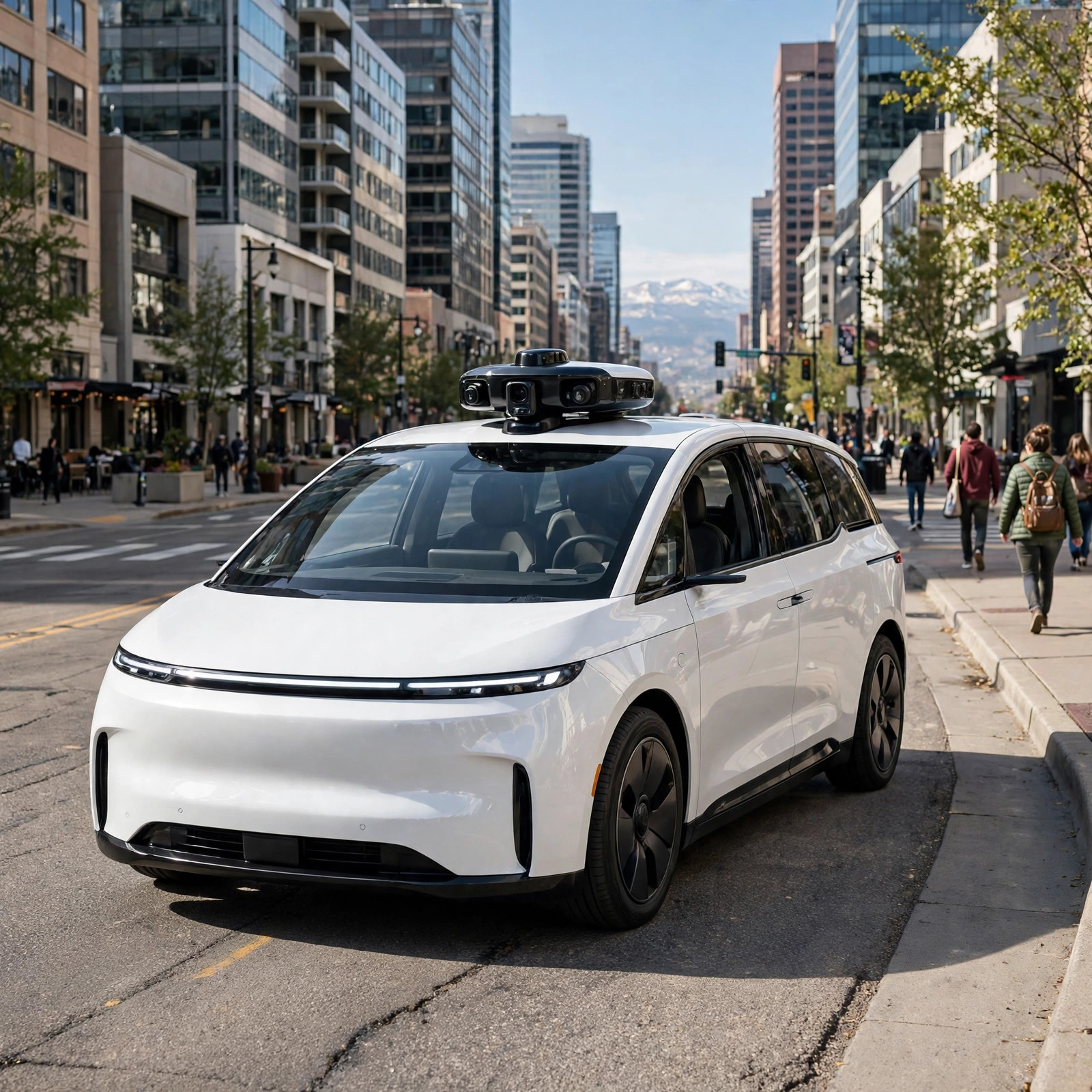
Hi, this is DatumDraft. If you hail a Waymo in downtown Denver tonight, a sleek Jaguar electric crossover will never pull up to your curb. Instead, a boxy minivan with a body built in China and sixth-generation American sensors bolted to its roof stops in front of you. With the Waymo paid robotaxi expansion now stretching across 15 US metro areas and Tesla running round-the-clock driverless shifts in 8 cities, who actually owns the street right now?
That expansion did not happen in a sudden mid-November overnight blitz. It is the result of a steady rollout that began with paid launches in Denver, San Diego, and Tampa on September 1, 2026, and reached 15 US metro areas by November 3.
At a Glance
- Waymo reaches 15 US metro areas by early November following its September paid expansion rollout.
- Paid rider volume surpassed 500,000 weekly trips as of September, targeting million-trip scale by year-end.
- Roughly 300 sixth-generation Zeekr-built Ojai minivans currently carry paying passengers, powering Denver and San Diego exclusively.
- Tesla countered by running round-the-clock driverless service across 8 cities in November, clashing directly in Tampa.
Did Waymo just launch in three cities overnight, or are you reading an updated headline?
If you only read news alerts this weekend, you might think Waymo conquered three cities overnight in mid-November. In reality, riders in Denver and Tampa have been paying for those exact trips since Labor Day week. It is like a neighborhood bakery that opened in September and packed its tables for two months, only for a food blog to update the timestamp on an old review in November and trick everyone into thinking the doors opened today.
A widely shared Robotics Media report carried a November 14 update stamp on an article originally published on September 10. That single date change triggered a wave of social media posts claiming the Waymo paid robotaxi expansion into Denver, San Diego, and Tampa just happened this week. The actual street calendar tells a much more methodical story.
Waymo turned on paid driverless service in Denver, San Diego, and Tampa on September 1, 2026. Denver opened with a 59-square-mile territory. San Diego started at 47 square miles, and Tampa launched across 44 square miles. Those three launches pushed Waymo’s live footprint to 14 US cities at the start of autumn.
Six weeks later, on October 14, Waymo removed the waitlist walls in San Antonio, San Diego, and Tampa, opening the app to anyone who downloaded it. That same day, San Antonio riders gained direct curbside pickup and drop-off at San Antonio International Airport. Airport access is a major operational hurdle for driverless fleets because terminal loops mix chaotic human traffic with strict municipal fee gates.
The map widened again between October 27 and November 3. Waymo pushed south in Los Angeles to cover the South Bay neighborhoods of Torrance, El Segundo, and Manhattan Beach. It also extended its San Diego boundary north into the coastal district of La Jolla. By November 3, the network officially stood at 15 active US metro areas.
| Date | Milestone | Verified Metric / Scope | Key Detail |
|---|---|---|---|
| 2026-09-01 | 3-City Paid Rollout | 14 US cities total | Paid driverless launches in Denver (59 sq mi), San Diego (47 sq mi), and Tampa (44 sq mi). |
| Sept 2026 | Volume & Fleet Disclosure | 500,000+ weekly paid rides | 4,000+ active vehicles; official target set at 1,000,000 weekly trips by year-end 2026. |
| 2026-10-14 | Public Access Expansion | Waitlists removed in 3 markets | Open to all riders in San Antonio, San Diego, and Tampa; San Antonio International Airport pickup live. |
| 2026-10-27 to 11-03 | Zone Widening & 15th Market | 15 US metro areas | Added LA South Bay (Torrance, El Segundo, Manhattan Beach) and northern San Diego (La Jolla). |
| 2026-11-19 | Scheduled CPUC Vote | California regulatory update | Pending vote on updated passenger service rules (not yet enacted as of Nov 15). |
Can you hail a Waymo in your city today? Here are all 15 active US markets in alphabetical order:
Atlanta, Austin (via Uber), Dallas, Denver, Houston, Las Vegas, Los Angeles, Miami, Nashville, Orlando, Phoenix, San Antonio, San Diego, San Francisco Bay Area, and Tampa.
What does 500,000 paid rides a week actually look like on city streets?
Half a million paid rides a week looks like a cold number on a spreadsheet, yet on city pavement it means more than 71,400 people every single day walk past an empty front seat and buckle into the back. Picture a sold-out professional football stadium emptying after the final whistle, and every single fan in that crowd riding home in a car with no human driver behind the wheel — not once a season, but every 24 hours.
Waymo crossed that 500,000 weekly paid ride threshold in its September 2026 operational report, backed by an active fleet of more than 4,000 vehicles. Notice the date label on that figure: it is a September milestone, not a newly released mid-November tally. Even at that September run rate, Waymo was completing roughly 0.83 paid trips every second of the day across its network.
How does a fleet double from 500,000 weekly trips in September to its stated goal of 1,000,000 weekly trips by the end of December? You cannot hit that number just by waiting for more downtown bar-hoppers on Friday nights. You have to connect the places where people spend money all week long: airports, beachfront hotels, and dense commuter suburbs.
That is why the October and November map expansions matter so much. Adding curbside service at San Antonio International Airport turns robotaxis from a local novelty into an expense-account staple for business travelers. Stretching into La Jolla in San Diego and the South Bay cities of Torrance, El Segundo, and Manhattan Beach in Los Angeles links affluent residential pockets directly to aerospace offices and coastal dining corridors.
Why is a Chinese-built minivan the only robotaxi you can hail in Denver and San Diego?
Seeing photos of 3,200 Zeekr vehicle shells parked at the Port of Los Angeles and assuming Waymo has thousands of Chinese-built robotaxis picking up passengers is like counting sacks of green coffee beans in a warehouse and claiming the cafe has already poured 3,200 cups of espresso. Raw vehicle bodies sitting at a port facility are inventory waiting for assembly, not active taxis on the app.
Let’s separate the warehouse from the street. Trade and port tracking reports estimate that roughly 3,200 Zeekr-built minivan shells have entered the United States through the Port of Los Angeles since 2024. Waymo has never officially confirmed that import stockpile figure, and those stripped shells arrive without their autonomous brains installed.
Once those shells leave the port, engineers outfit them with the 6th-generation Waymo Driver hardware suite to create the vehicle Waymo calls the “Ojai.” Right now, roughly 300 Ojai minivans are actually on public roads carrying paying passengers. This autumn rollout marks the first time the 6th-generation Ojai has carried paying riders outside of California.
Even more striking is how Waymo deployed those 300 vans. In both Denver and San Diego, Waymo skipped its older 5th-generation Jaguar I-PACE electric SUVs entirely. Both cities run as 100% Ojai-exclusive territories.
Why bet two brand-new cities solely on a vehicle platform with roughly 300 active units nationwide? The answer comes down to weather survival and unit economics. Denver’s 59-square-mile zone brings freezing temperatures, slush, and winter road grime that can blind older sensor domes. Waymo designed its 6th-generation hardware specifically to handle harsh weather while cutting the total sensor count to bring down the cost per vehicle.
To drive safely in snow or coastal fog, a robotaxi combines three types of eyes: cameras that read street signs and brake lights, radar that bounces radio waves off moving metal in heavy rain, and lidar (light detection and ranging, which uses laser pulses to draw a crisp 3D map of everything around the car). How the onboard computer blends those three inputs — and decides which sensor to trust when slush or glare blinds another — is called autonomous sensor fusion. Running Denver and San Diego exclusively on the Ojai proves that Waymo trusts its 6th-generation sensor suite to carry full commercial loads without a Jaguar safety net.
| Metric / Category | Port Import Stockpile (Shells) | Active Street Fleet (Ojai) |
|---|---|---|
| Unit Count | ~3,200 units (since 2024) | ~300 vehicles (as of Nov 2026) |
| Verification Status | Media / port estimate (unconfirmed by Waymo) | Verified active commercial passenger fleet |
| Hardware State | Base Zeekr minivan bodies at Port of LA | Fully integrated with 6th-Gen Waymo Driver |
| Exclusive Markets | N/A (awaiting commissioning) | 100% of Denver (59 sq mi) & San Diego (47 sq mi) |
When Waymo’s 15 cities meet Tesla’s 24/7 push in Tampa, how do you measure the lead?
On the humid streets of Tampa after midnight, the strangest race in modern transportation is happening in real time. In one lane rolls an autonomous vehicle from a 15-city lidar heavyweight, and right next to it sits a camera-only challenger that switched on round-the-clock driverless service across 8 cities on November 11.
Comparing Waymo and Tesla right now is like comparing a national department store chain that operates in 15 cities and publishes its weekly register receipts against a fast-moving challenger that just hung “Open 24 Hours” signs on 8 stores while keeping its total sales volume locked in a safe. Both are serving real customers on public roads, yet they disclose completely different scorecards.
Here is the strict rule every analyst and investor needs to follow when comparing the two: never invent a weekly ride comparison. Waymo reported more than 500,000 weekly paid trips as of September 2026. Tesla has never disclosed a weekly paid ride count for its robotaxi fleet. Any chart claiming to show Tesla’s weekly trip volume next to Waymo’s is guessing.
Instead, compare what we can verify on the pavement. As we detailed in our breakdown of Tesla Robotaxi 24/7 operations, Tesla flipped the switch to round-the-clock driverless service across 8 cities on November 11. Tampa is the marquee battleground where both companies now run paid driverless cars on the same streets at the same time — Waymo across its 44-square-mile zone opened to all riders on October 14, and Tesla running its 24/7 schedule.
While American cities like Tampa, Denver, and San Antonio watch two rival driverless fleets fight for curb space, European riders are still waiting at the regulatory starting gate. Notice the contrast with Tesla FSD Europe approval, where individual country testing steps still lead up to a decisive December European Union committee vote. In the United States, the battle has already moved from permission to scale.
That does not mean US regulators have stepped off the field. Four days from today, on November 19, 2026, the California Public Utilities Commission (CPUC) — the state agency that licenses and regulates commercial passenger rides in California — is scheduled to vote on new autonomous vehicle rules. Because that vote has not happened yet, treat any article claiming the CPUC rules are already law with skepticism. This upcoming vote arrives right after the same week California rewrote the ticket rules for driverless cars and updated heavy-duty autonomous truck rules through the state DMV.
Key takeaways: What to watch between November 19 and New Year’s Eve
The Waymo paid robotaxi expansion across 15 US cities and more than 500,000 weekly paid rides as of September proves that driverless ride-hailing has moved far past the science-project stage. Reaching 1,000,000 weekly trips by the end of the year now hinges on two concrete tests: how quickly Waymo can turn port-stored Zeekr shells into active Ojai minivans beyond today’s 300-unit fleet, and how California’s November 19 CPUC vote shapes rules in its largest home state.
- Ignore the November 14 headline mirage: Denver (59 sq mi), San Diego (47 sq mi), and Tampa (44 sq mi) launched paid rides on September 1, opened to all riders alongside San Antonio Airport on October 14, and grew into a 15-city network by November 3.
- Separate port shells from active vans: Roughly 3,200 Zeekr bodies have reportedly entered through the Port of Los Angeles since 2024, yet ~300 6th-generation Ojai minivans actively carry paying passengers today — including 100% of rides in Denver and San Diego.
- Keep the Tesla comparison clean: Waymo disclosed 500,000+ weekly rides across 4,000+ cars in September, while Tesla launched 24/7 driverless service across 8 cities on November 11 without releasing weekly ride totals. Watch Tampa to see how both fleets perform head-to-head.
Have you hailed a 6th-generation Ojai minivan in Denver or San Diego, or tried a late-night Tesla 24/7 robotaxi in Tampa? Share what your wait time and fare looked like in the comments below, and bookmark this page for our update after the November 19 CPUC vote.
Sources
- Waymo Pushes Into LA’s South Bay as Robotaxi Map Widens Across 15 US Cities — Eletric-Vehicles, November 3, 2026
- Waymo Now Runs 500,000 Rides a Week: A $48 Billion Industry Is Taking Shape — Stock Moguls, September 3, 2026
- Waymo Ojai Zeekr Import Stockpile and Commercial Fleet Analysis — Business Model Analyst, 2026
- How Autonomous Sensor Fusion Works: Who Does the Car Trust When Camera, Radar, and Lidar Disagree? — DatumDraft, 2026
- Tesla Robotaxi Goes 24/7 in 8 Cities, and Why Its Brief Texas Lead Over Waymo Is Misleading — DatumDraft, November 2026
- Tesla FSD Europe Approval Countries: Why Finland Is #11, Yet the Real Gate Is the December EU Vote — DatumDraft, November 2026
- California DMV Autonomous Rules Nov 2026: What Actually Changed for Driverless Tickets and Semi-Trucks — DatumDraft, November 2026